01
Define the audience task
What should guests understand, try or discuss? This guides the programme and the reason to attend.
A conference where the conversation continues. A festival where people discover something new. We develop the idea, shape the programme and bring staging, space and production together.
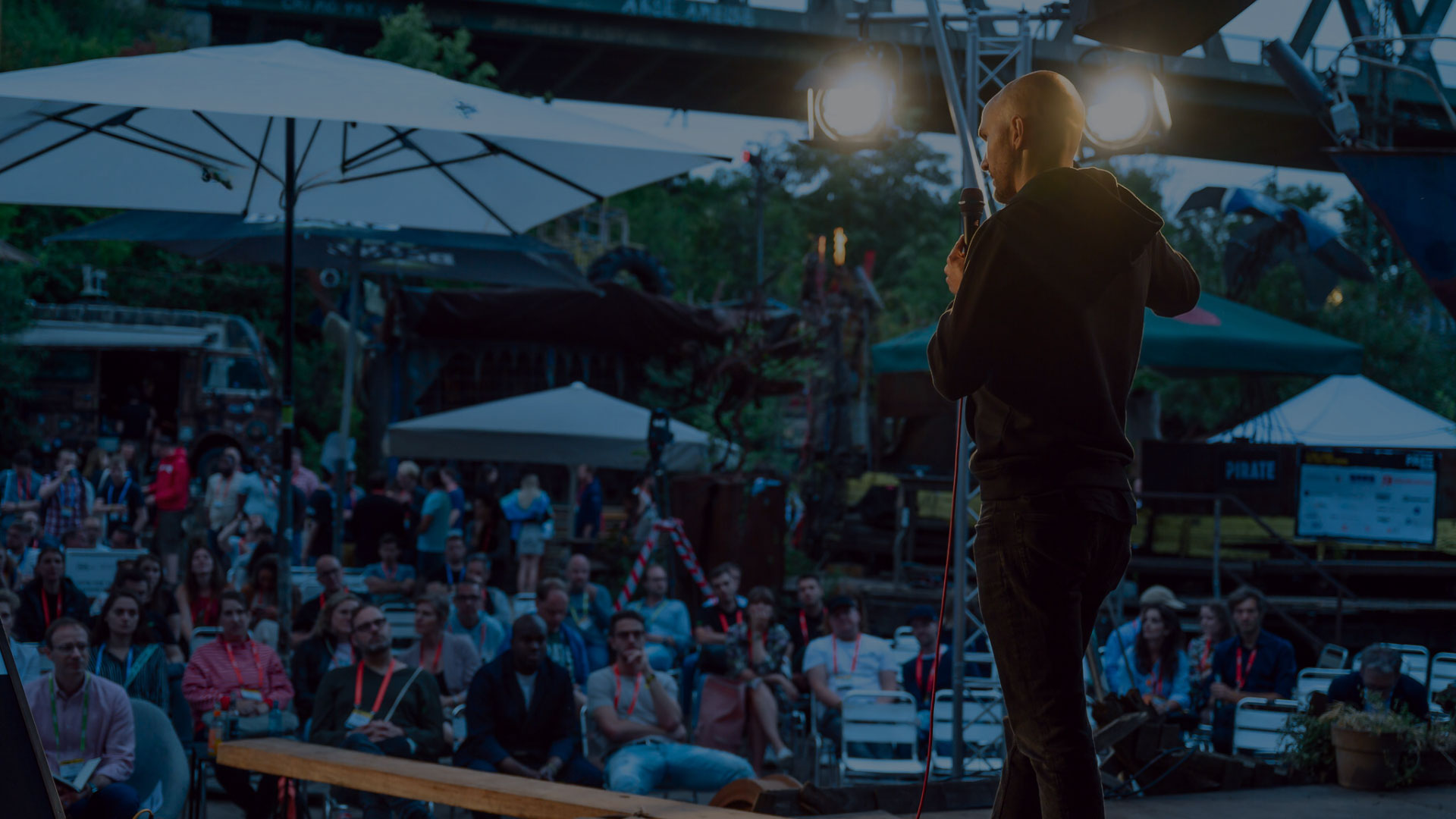
People might come to listen, question an idea, try something or meet someone. We build the formats and rhythm around that: what belongs on stage, where conversation can happen and how the setting and production support it.
Content, participation and technical delivery need to work together.
Explore the format →Develop an agenda from scratch or improve a draft, independently or alongside production.
Explore the format →Choose programme support, stand activation or a gathering around the fair.
Explore the format →Bring parallel content and informal exchange into one workable setting.
Explore the format →Give customers, partners or press a useful product demonstration.
Explore the format →Prepare the show, host, nominee assets and production cues.
Explore the format →

Our Hannover Messe work included a five-day stage programme with thematic sessions and speakers. It is a concrete example of content planning within a fair environment. It shows the practical connection between programme choices, contributors and the timetable.
Read the project accountA strong opening, a well-judged question, a shift from stage to conversation: we shape the rhythm of the event. Space, speaker preparation, lighting and sound are part of the design, so the idea holds together live.
01
What should guests understand, try or discuss? This guides the programme and the reason to attend.
02
We connect stage content, conversation formats, venue and hospitality. Guest journeys and transitions between sessions are part of the design.
03
Direction, technical crews, contributors and suppliers work from one running order. Rehearsals and agreed cues prepare the moments that matter live.
Your team approves goals, budget and editorial claims. We agree which workstreams PIRATEx coordinates, who confirms feasibility and how changes are approved. Conventional stand fabrication remains a specialist trade; its partner and permissions need an explicit scope.
Yes. The proposal identifies existing partners, their responsibilities and the handovers needed for our agreed work.
No. Share what you know about the audience, occasion and date. Open questions are a useful starting point.
The formats, locations, programme complexity, suppliers, preparation and event-day roles. Those assumptions appear in the proposal.
Tell us about the occasion and the people you want to bring together. An early idea is enough. We discuss the format and experience, then set out the next steps, deliverables, responsibilities and fees in a proposal.
Discuss your brief