Conference Programme Design

A   programme   that   gets   people   talking.  

The best questions do more than fill an agenda. They make people listen, challenge an idea and bring their own experience into the room. We shape themes, sessions and speaker briefs into a programme with a point of view and a clear thread.

Programme design brings content and the live experience together. We choose themes and formats for what they help the audience do, give contributors distinct roles and shape the rhythm of listening, discussion and meeting people. The result is a coherent agenda, prepared sessions and a running order built for the stage.

What should your guests take away?

You want a conference that adds up to more than a series of good talks. Contributions should build on each other, open up different perspectives and spark conversations between sessions. That takes editorial judgement: which question holds the day together, who brings a different perspective, and when should the audience take part?

Programmes shaped around their audiences

A trade-fair stage and a specialist webinar series ask different things of their audiences. These projects show how we shaped themes, contributors and formats for each setting.

HANNOVER MESSE
Hannover Messe

Hannover Messe

The task
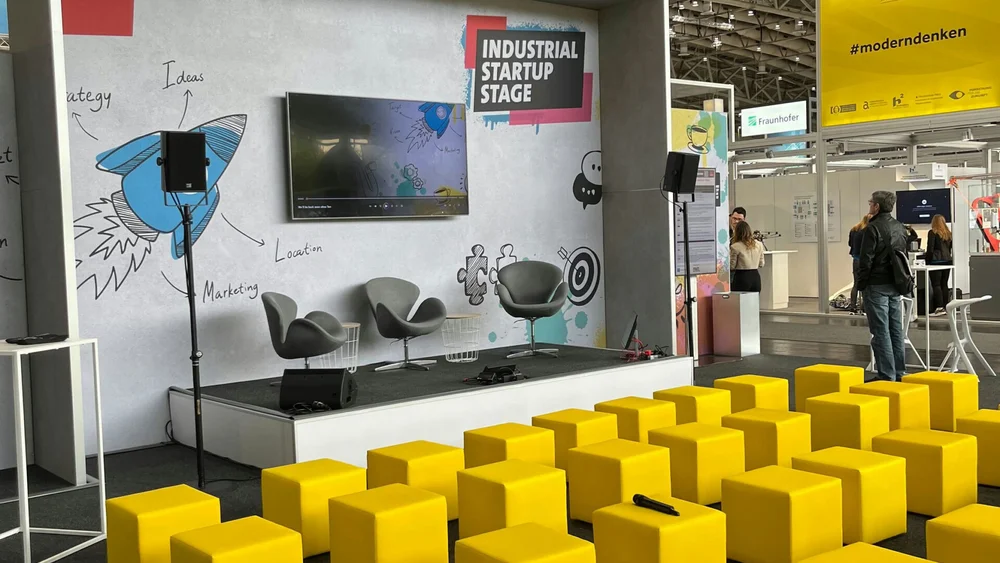
A five-day Startup Area programme and a Your Future Stage for young talent at an industrial trade fair.
Our role
Programme concept, startup pitches, moderation and jury coordination. The Your Future Stage work included themes and relevant speakers.
Why it matters here
An editorial programme has to work for different audiences and fit the practical running of a live stage.
Read the project account →
GIZProject partner
Global Sustainable Chemistry Spotlights

Global Sustainable Chemistry Spotlights

The task
ISC3 needed a webinar series about sustainable chemistry.
Our role
Event strategy, presentation formats, participant journey and briefings for speakers and moderators, alongside technical support.
Why it matters here
A series needs a consistent purpose while each session gives participants a distinct reason to join.
Read the project account →

What a programme decision looks like

Illustrative working example. This is a way to explain the method, not a client document or a fixed session package.

Audience question
We have tested a new approach. What needs to change before our wider team can use it?
Session purpose
Help participants compare the conditions for a rollout, rather than hear three versions of the same success story.
Contributors and format
A practitioner brings a specific example. A second contributor challenges the assumptions. A host draws out the decisions and trade-offs.
Audience contribution
Participants identify one condition that is missing in their own organisation. Their questions shape the discussion.
Speaker and producer brief
Speakers receive the question, audience context and distinct roles. The producer sees timing, microphones, audience participation and any changeover requirements.

From the central question to the live programme

  1. 01

    Understand the audience

    You share the event purpose, audience, existing agenda and stakeholder constraints. We agree what the programme should help people do.

  2. 02

    Make the editorial choices

    We shape themes, session purposes and formats. You can see why a session belongs and where ideas repeat or gaps remain.

  3. 03

    Prepare the contributors

    We define speaker roles and briefing requirements. Proposed, approached and confirmed contributors remain visibly distinct.

  4. 04

    Prepare the programme for the stage

    Your producer checks feasibility. We record changes, responsibilities and outstanding approvals so the programme can move into production.

The decisions behind your programme

Audience and objective brief

A working brief records the audience, prior knowledge, occasion and programme objective. It gives the track a central question and an editorial thread.

Session architecture

Each agreed session has a purpose, format, duration and participant task. Talks, discussions and working sessions each earn their place in the running order.

Speaker briefs and status

Briefs set out the task, expected audience knowledge and contribution to the programme. A status record distinguishes proposed, approached and confirmed speakers.

Participation and networking design

Questions, discussion time and meeting formats fit the objective and timetable. Preparation, hosting and room requirements are visible.

Running order for live production

A programme with timings, responsibilities, operating requirements, approvals and open dependencies gives your producer a working document they can assess.

Planning the work together

Who does what?

You approve editorial content and the final programme. Your producer checks rooms, technology, changeovers and feasibility. PIRATEx designs the programme and records the decisions. A designed programme is only confirmed once the required speaker confirmations and producer approvals are in place.

What does the proposal cover?

Before quoting, we agree the tracks, session count, schedule, review rounds and responsible contacts. Speaker sourcing and booking, rehearsals, hosting and event-day delivery require an explicit additional scope. Your existing suppliers can stay involved.

What is ready at the end?

The handoff is complete when every contracted session has a purpose, format, timing, speaker status and operating requirements, with outstanding approvals clearly identified. Your team can see what is ready and what still needs a decision.

Questions before you decide

Can you improve an agenda we have already started?

Yes. Send the draft and explain what is not working. The agreed scope can focus on the editorial structure, selected tracks or session briefs, rather than rebuilding the whole event.

Can we keep our producer and venue?

Yes. Programme design can sit alongside your existing production team. We agree who checks rooms, technical requirements, timings and changes before the handoff.

Do you find and book the speakers?

Speaker criteria and briefs belong to programme design. Sourcing, approaches, fees, contracts, rehearsals and hosting are agreed separately when needed. A suggested name is not a confirmed booking.

What determines the cost and schedule?

The number of tracks and sessions, research needed, state of the existing programme, review rounds, speaker work and production interfaces. Share the event date and known approval deadlines; the proposal makes the agreed work and dependencies explicit.

Do we need a finished brief before talking?

No. An audience, a subject, the date if known and your current planning situation are enough to start. We use the conversation to identify the work you actually need.

Tell us what you have in mind

What should guests see differently, discuss or try after your conference? Tell us about your audience and your idea. If you have an agenda, we would like to see it. Together, we explore the themes, perspectives and formats that could hold the programme together, then propose the work, responsibilities and basis for a quote.

Discuss programme design